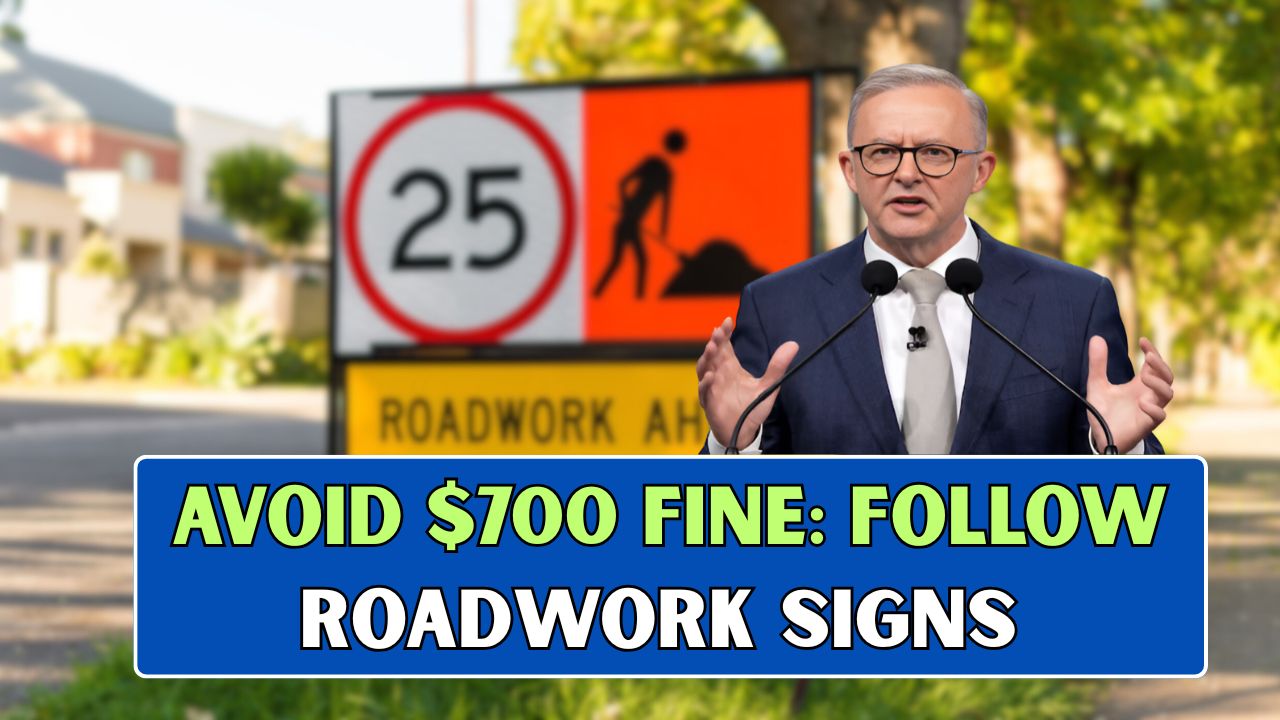
Drivers across Australia are being warned in 2026 to take roadwork signs more seriously than ever. Authorities are increasing enforcement in construction zones, and failing to follow temporary traffic rules can now lead to fines of up to $700 or more, depending on the offence and state.
Why Roadwork Rules Are Being Strictly Enforced
Roadwork zones are considered high-risk areas because workers are often close to moving traffic. Even small mistakes by drivers can lead to serious accidents. To improve safety, stricter penalties and more monitoring systems have been introduced, especially in busy or high-speed construction zones.

Common Mistakes That Can Lead to Fines
Many drivers underestimate temporary signs, assuming they are optional or less important than permanent road signs. This is a major mistake. Speeding through reduced speed zones, ignoring lane closures, or failing to obey traffic controllers can all result in heavy penalties. Even slowing down too late can still lead to a fine if you pass a clearly marked sign.

Speed Limits in Roadwork Zones
Temporary speed limits must be followed as soon as you pass a roadwork sign. These limits apply even if no workers are visible at the time. Speed cameras and mobile enforcement units are often placed in these zones, making it easier for authorities to detect violations instantly.

Double Demerit Points and Higher Penalties
In some regions, roadwork offences can attract higher fines or additional penalties, especially during enforcement periods. This may include extra demerit points or stricter penalties for repeat offences, increasing the long-term impact on your driving record.

The Role of Traffic Controllers
Traffic controllers have legal authority in roadwork zones. If they signal you to stop, slow down, or change direction, you must follow their instructions immediately. Ignoring a traffic controller is treated as a serious offence and can result in significant fines or penalties.
What Drivers Should Do
Drivers should stay alert when approaching roadwork zones and reduce speed early. Watching for signs, cones, and worker signals can help avoid sudden decisions and potential fines. Maintaining safe distances and being patient is the best way to navigate these areas safely.
Final Thoughts
The $700 fine warning is a reminder that roadwork rules are not optional. In 2026, enforcement is stronger, and penalties are higher to protect both workers and drivers. The key takeaway is simple: follow every roadwork sign, slow down immediately, and treat temporary rules as seriously as permanent ones.